
Kitchen Respray Norwich


100+ Happy Customers
How much does kitchen spraying cost in Norwich?
Most Norwich kitchen resprays cost between £800 and £2,000 and take three to five days, against roughly £10,000 and about four weeks to rip the kitchen out and replace it. The price is driven by how many doors and drawer fronts you have and what they are made of, not by the size of the room. The units, worktops, plumbing and appliances all stay where they are.
- Typical cost
- £800 – £2,000
- Time on site
- 3 to 5 days
- Kitchen usable
- Throughout
- Colours
- RAL, F&B, Little Greene
Most Norwich Kitchens Are Worth Keeping
The kitchens we get called out to in Norwich are rarely worn out. The carcasses are solid, the layout works, the plumbing is where it should be, and the only thing wrong is that the doors are the colour somebody chose in 1997.
Replacing all of that to fix the colour means a skip on the street for a fortnight, a plumber, an electrician, a fitting date you wait on, and around £10,000. In a lot of the older city houses it also means losing storage, because the units were built to fit the room and the replacements will not be.
Spraying changes the colour and the finish and leaves everything else alone. You keep the kitchen that fits, and you have it back inside a week.
What a Norwich Kitchen Respray Costs
These are the bands we actually quote in, published so you can decide whether this is worth a phone call before you make one. Where you are in Norwich does not change the price.
| Work | Typical price | On site |
|---|---|---|
| Kitchen respray — doors, drawer fronts and frames | £800 to £2,000 | 3 to 5 days |
| Replacing the kitchen instead, for comparison | £10,000+ | About 4 weeks |
What moves the price
How many doors and drawer fronts
The count is what a quote is built on, not the floor area. A galley kitchen with ten doors and an island kitchen with thirty are very different jobs in houses of the same size.
What the doors are made of
Solid timber and factory-finished MDF both take a sprayed finish well. Vinyl-wrapped doors need the wrap dealt with first, and that adds time.
The colour you are going to
Going darker is straightforward. Coming from a dark unit up to a pale colour usually needs an extra coat to bury what is underneath, and that is another day.
Condition of what is there
Chips, swollen edges by the sink and lifting corners all need filling and making good before anything is sprayed. Sound doors cost less to prepare.
Whether the carcasses are done too
Most jobs are doors, drawer fronts and the visible frames. Adding end panels and open shelving means more masking and more material.
Handles and hinges
While the doors are off is the cheapest time to change tired hinges or swap the handles, but it is still extra parts and extra fitting.
Every kitchen gets a fixed price once we have seen it, and that price is what you pay. If something turns up during prep that genuinely changes the job — swollen doors behind a leaking sink is the usual one — you hear about it before we carry on, not after.
How the Job Actually Runs
Five days in your house, in order, so you know what is happening and when you get your kitchen back.
Survey and fixed price
30 to 45 minutesWe come to you, count the doors and drawer fronts, and check what they are actually made of — solid timber, factory-finished MDF and vinyl-wrapped board are three different preparations. We look at the hinges, agree the colour and the sheen, and you get a fixed price before anything is booked in.
Doors off, numbered and bagged
Half a dayEvery door and drawer front is numbered and matched to the unit it came off, with its hinges and handles bagged alongside it. Kitchen doors are rarely as identical as they look, and doors going back on the wrong units is the sort of mistake that shows for the rest of the kitchen's life.
Degrease, fill and key
Half to a full dayKitchen doors carry years of cooking film, heaviest on the run nearest the hob, and nothing sticks to that. They are degreased first, then chips and swollen edges are filled, then the whole face is abraded so the primer has something to grip. This is the stage that gets skipped, and it is why home-sprayed kitchens start peeling around the handles inside a year.
Masking and dust control
Half a dayWorktops, appliances, floor, walls and anything else staying put are sheeted and taped, and we run extraction while spraying so overspray does not drift through the rest of the house. Your kitchen stays plumbed in and working the whole time — you are without the doors for a few days, not without the kitchen.
Primer and two topcoats
1 to 2 days, plus dryingAn adhesion primer goes on first, then two topcoats of a cabinet-grade finish, sprayed rather than brushed so there is no brush texture and no roller stipple left in the surface. Colours are matched to RAL, Farrow & Ball or Little Greene, in matt, satin or gloss.
Refit, align and cure
Half a day, then 2 to 3 weeksDoors go back on their own units, get aligned properly, and the handles are refitted. You can use the kitchen straight away, but a sprayed finish carries on hardening for two to three weeks after we leave. Go easy on it in that window and it stays looking right for years.
Norwich Kitchens, by the Age of the House
Norwich has three broad kinds of kitchen and they are not the same job. Which one you have decides how the doors are prepared, whether they can be sprayed in place at all, and how long you are without them.
Worth knowing before you ring anyone: the honest answer is not always to spray. Some doors are past it, and we would rather say so at the quote than take the work and hand you a finish that fails.
The Golden Triangle and the city terraces
Victorian and Edwardian terraces off Unthank Road and Newmarket Road usually have the kitchen in a narrow rear extension, with units built to fit the room rather than bought as a set. Replacing them means losing storage you cannot buy back. There is no room to spray in place, so the doors come off to a sheeted room.
Thorpe St Andrew, Sprowston, Hellesdon and Old Catton
Interwar and postwar semis, mostly with kitchens fitted in the eighties and nineties. Factory-finished MDF doors, dated in colour but structurally sound, and they take a sprayed finish very well once the original sheen has been flatted back.
Cringleford, Costessey, Trowse and the newer estates
Ten to fifteen year old vinyl-wrapped doors, typically lifting at the edges nearest the oven and the kettle. The wrap has to be dealt with before anything is sprayed. If it has failed across most of the doors we will say so rather than spray over it.
What We Spray
Kitchen Cabinets & Doors
The biggest change for the least disruption. Doors and drawer fronts off, prepped, sprayed and back on, with the units and worktops staying exactly where they are.
Fitted Wardrobes
Built-in wardrobes in the older Norwich houses were made to fit the room. Respraying keeps the fit and the storage and changes the part you actually look at.
Media Walls & Joinery
Alcove units, shelving and feature joinery sprayed to match, so a knocked-through room reads as one piece rather than three different finishes.
Bathroom & Utility Units
Vanity units, storage cupboards and utility runs. If it is fitted furniture and the carcass is sound, it can be sprayed.
Kitchen respray or replacement doors?
If you are comparing replacement kitchen doors in Norwich with a respray, check the condition and style of the doors first. Respraying keeps their existing shape and changes the colour and finish. It will not turn a shaker door into a flat-fronted one or change the kitchen layout.
Keep and respray
Consider spraying when the units and doors are sound, the layout works and you want a different colour. Count doors, drawer fronts, end panels and island sides so the quote covers every visible surface you want changed.
Assess damaged doors first
Send close-ups of lifting vinyl, swollen edges and damage near the sink or oven. Some surfaces need additional preparation; others may need replacement before a coating is worth considering. A colour change alone will not resolve those problems.
Compare the same scope
Check whether each quote includes visible frames, end panels, preparation and refitting. If you want new handles, include that in the discussion. A doors-only price and a price for all visible cabinetry are different jobs.
Sprayed Kitchens and Fitted Joinery
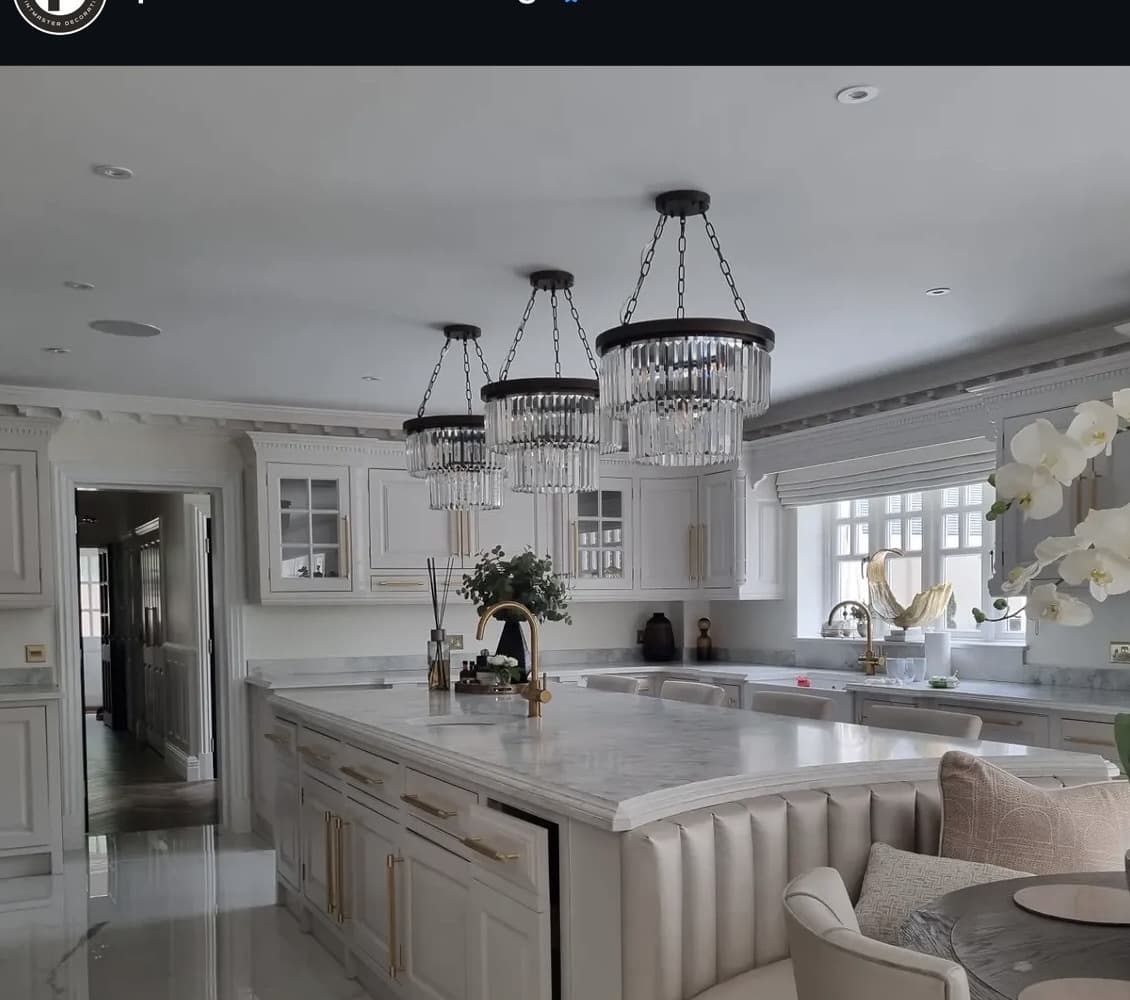
Our own photographs of finished work — no stock photography and no showroom shots.
Painted shaker units and island, brass hardware left on show against a pale finish.
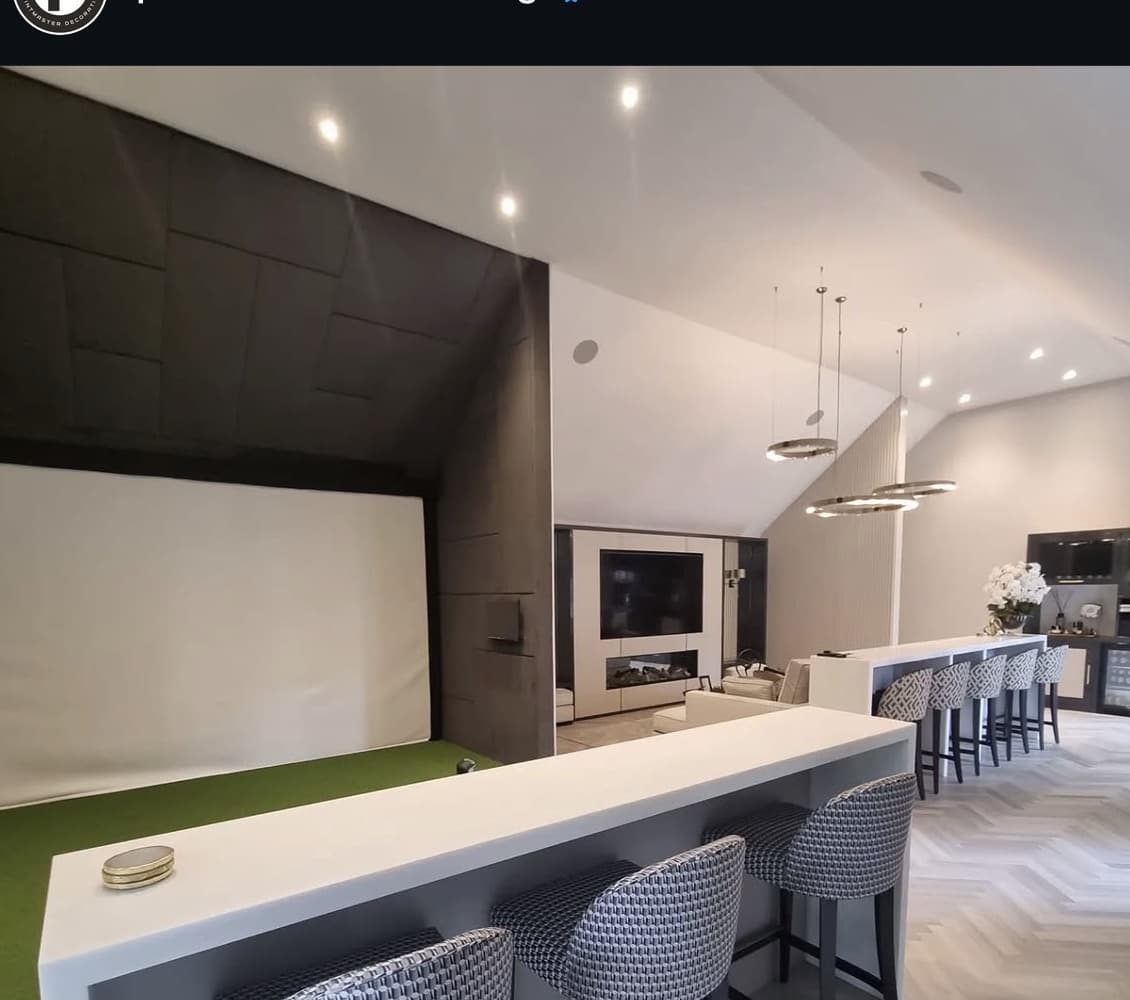
Open-plan kitchen, bar run and media wall sprayed to read as one continuous finish.
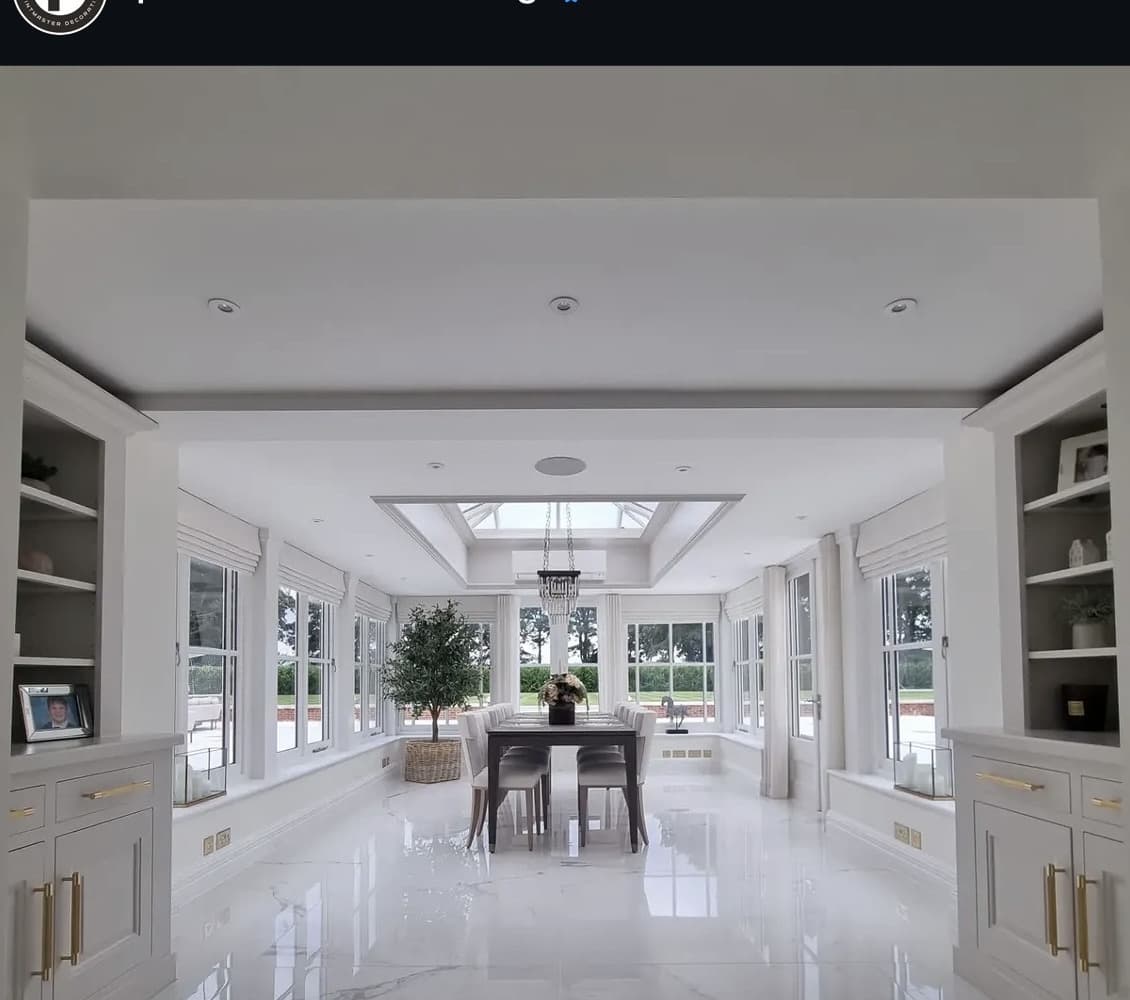
Fitted cabinetry and shelving either side of a garden room, matched to the wall colour.
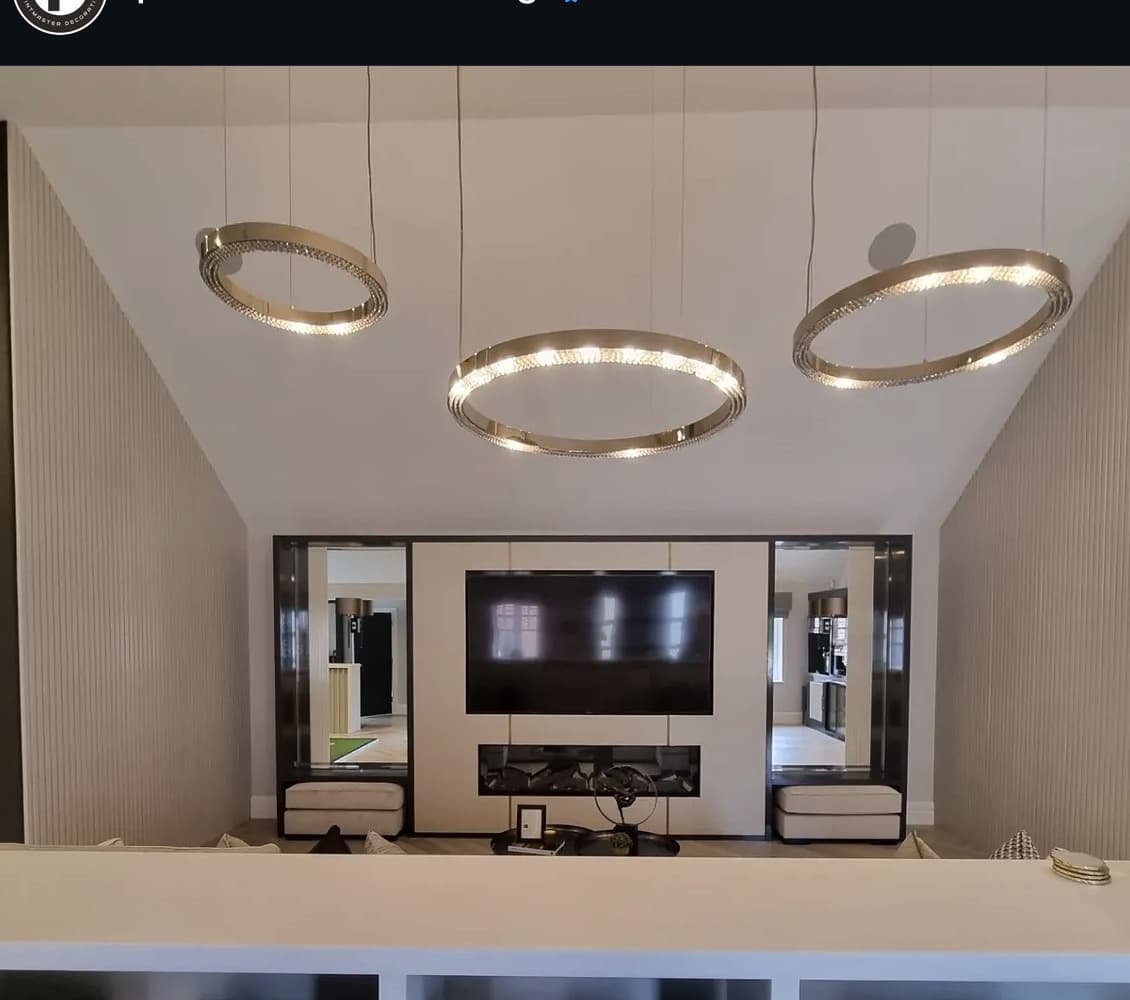
Media wall joinery and fluted panelling — the same spraying, away from the kitchen.
Common Questions
No. Respraying keeps your existing doors and changes their colour and finish. Replacement doors change the door itself and can provide a different profile. If you like the layout and door style, a respray may be suitable; damaged or swollen doors need assessing before you choose. Compare quotes that cover the same frames, panels, preparation and refitting.
Most Norwich kitchen resprays cost between £800 and £2,000, against roughly £10,000 to rip the kitchen out and replace it. The price follows how many doors and drawer fronts you have and what they are made of, not the size of the room. Where you are in Norwich does not change it.
Three to five days on site for most kitchens. The doors come off on day one and go back on at the end, so you are without the doors for a few days rather than without the kitchen.
Yes. The units, worktops, sink and appliances all stay exactly where they are and stay plumbed in. You lose the cupboard doors for a few days, which means open shelves for a week, not a kitchen out of action.
Not if it is prepared properly. Kitchen doors carry years of cooking grease, so they are degreased, filled and abraded before an adhesion primer and two topcoats of a cabinet-grade finish go on. Peeling around the handles is what happens when that prep is skipped.
Usually, yes, but the wrap has to be dealt with first and that adds time to the job. If the wrap has already lifted across most of the doors — common on ten to fifteen year old doors near the oven — we will tell you honestly that spraying over it is not the answer.
Yes. RAL, Farrow & Ball and Little Greene are all matched, in matt, satin or gloss. Going from a dark unit up to a pale colour usually needs an extra coat, which adds about a day.
No. Everything is done in your home. Doors are numbered and matched to the unit they came off, and their hinges and handles are bagged with them, so every door goes back where it belongs.
Worktops, appliances, floor, walls and anything else staying put are sheeted and taped before anything is sprayed, and extraction runs while we work so overspray does not drift into the rest of the house.
Most jobs are the doors, drawer fronts and visible frames, because that is what you actually see. End panels, open shelving and island sides can be included as well — it means more masking, so we price it in at the quote.
Planning more work in Norwich?
Explore these services if your project includes more than one part of the property.
Interior painting and decorating in Norwich
Walls, ceilings and woodwork, from a single room to a whole home.
UPVC window and door spraying in Norwich
A colour change for sound existing frames and conservatories.
Looking for this service elsewhere? See our kitchen respraying across Norfolk or our kitchen respraying in Great Yarmouth.
Explore all our painting and decorating services in Norwich.
Want a Fixed Price for Your Kitchen?
We come out, count the doors and give you a number. No obligation, and no pressure if the honest answer turns out to be a new kitchen.