
Wallpapering Norwich


100+ Happy Customers
How much does wallpapering cost in Norwich?
A single feature wall costs between £80 and £200 and takes about half a day. Full rooms are priced per roll and usually take a day. The biggest thing moving that price is not the hanging at all — it is whether old paper has to be stripped first and what state the wall is in underneath, because wallpaper hides nothing.
- Feature wall
- £80 – £200
- Feature wall time
- Half a day
- Full room
- Priced per roll
- Full room time
- Usually 1 day
Wallpaper Hides Nothing
People often reach for wallpaper because a wall is in poor shape. It is the one thing it will not fix. Paint can be flatted and coated until a dip disappears; paper is a thin, even film pulled tight across the wall, and every hollow behind it turns into a shadow line the moment the light comes in low.
So most of a wallpapering job is not hanging. It is getting the old paper off without wrecking the plaster, making the wall genuinely flat, sealing it so it does not drink the paste, and lining it where it needs lining.
Seams that open a few weeks later almost always trace back to one of three things: an unsealed wall, no lining where it was needed, or the room being forced dry. None of them are the paper’s fault.
What Wallpapering Costs in Norwich
These are the bands we quote in. Full rooms are per roll because roll counts vary so much with pattern repeat — a large repeat on the same four walls can add several rolls on its own.
| Work | Typical price | On site |
|---|---|---|
| Feature wall, one wall papered | £80 to £200 | Half a day |
| Full room | Priced per roll | Usually 1 day |
What moves the price
Whether old paper has to come off first
Stripping is its own job and in an older Norwich house it is often several layers deep. Bare, sound walls are the cheapest starting point there is.
What the wall is like underneath
Once the old paper is off you find out what has been hiding. Blown plaster, old repairs and skim that has been papered over instead of made good all have to be dealt with before anything new goes up.
Whether it needs lining first
On lime plaster and older walls, lining paper is what stops every dip and repair reading through the finish paper. It is an extra stage and is rarely optional in a period property.
The pattern repeat
A plain or random-match paper goes up quickly. A large repeat, a strict straight match or a mural means more measuring, more waste and more rolls, and that shows up in both time and materials.
The paper itself
Paste-the-wall vinyls are forgiving. Grasscloth, hand-printed and delicate papers are slow, unforgiving work where a smear of paste in the wrong place ruins a drop.
How many corners and obstacles
Chimney breasts, alcoves, sockets, radiators, sloped ceilings and out-of-square corners are all cuts. A plain rectangular wall and a chimney breast the same size are not the same job.
Every job gets a fixed price once we have seen the walls. Stripping is the one stage that can genuinely surprise both of us — if what is behind the old paper changes the work, you hear about it while the wall is open, not afterwards.
How the Job Actually Runs
Why the hanging is the last and shortest part of a wallpapering job.
Quote, paper and quantities
20 to 30 minutesWe measure the drops properly and work out the rolls including the pattern repeat, which is the number people most often get wrong when ordering themselves. Order short on a large repeat and you may not get the same batch again. Bring us the paper you want or we will source it.
Stripping the old paper
Half a day upwardsScored, soaked and steamed off rather than pulled, so the plaster underneath survives. In older city houses this is regularly three or four layers, and the last one is often stuck straight to bare plaster.
Making the wall good
VariesCracks and holes filled, blown patches cut out, everything sanded flat, old paste residue washed off. Wallpaper hides nothing — a dip that you would never notice under emulsion becomes a shadow line down a papered wall.
Sizing, and lining where it is needed
Half a day, plus dryingSizing seals a porous wall so the paste does not vanish into it and gives you the slip needed to slide a drop into place. On uneven or older walls, lining paper goes on cross-lined and is left to dry fully before the finish paper — skipping this is the usual cause of seams opening later.
Hanging
Half a day to a dayPlumbed off a true vertical rather than a corner, because no corner in a Norwich terrace is straight. Pattern matched drop to drop, seams butted rather than overlapped, cut in around sockets, and the paste kept off the face of the paper as it goes.
Finishing and clearing
Last hourEdges trimmed at the skirting and ceiling, sockets refitted, offcuts and the roll numbers left with you in case a repair is ever needed. Keep the room out of a draught while it dries — forcing it dry is what opens seams.
Norwich Walls, and What They Need First
How a wall was built decides how it should be papered. The city terraces and the new estates are at opposite ends of the problem, and using the same approach on both is how seams end up opening.
If you are deciding whether to do it yourself: a flat, square, previously papered wall in a modern house is a genuinely doable weekend. A period chimney breast with a large repeat and no square corner to work from is where most self-taught attempts go wrong, and it is also the wall people most want papered.
Victorian and Edwardian terraces, Golden Triangle
Lime plaster, lath walls and corners that have not been square since the house was built. These almost always want lining first, and stripping regularly turns up several generations of paper underneath. This is where a good hanger earns the difference.
Interwar and postwar semis
Sound skimmed walls and reasonably true corners, so a feature wall is genuinely a half-day job. Chimney breasts and the wall behind a bed are the two most common requests.
New builds and recent estates
Flat, square plasterboard, which is the easiest surface there is — but new plaster is thirsty and unsealed. Size it properly or the paste is pulled out of the paper before you have slid the drop into place.
What We Do
Feature Walls
One wall, half a day, and the room reads completely differently. Chimney breasts and the wall behind a bed are the usual starting points.
Full Rooms
Corners that are not square, ceilings that are not level and obstacles to work around. Older Norwich rooms rarely give you four clean walls.
Stripping Old Paper
Scored, soaked and steamed rather than torn off, with the plaster underneath made good afterwards instead of papered straight back over.
Lining & Sizing
On lime plaster and older walls this is what stops every dip showing through the finish paper. In this part of the city it is rarely optional.
Papers We Hang
Bring us what you have chosen, or we will source it for you.
- Paste-the-wall wallpaper
- Paste-the-paper wallpaper
- Vinyl and washable
- Textured and embossed
- Luxury and designer
- Grasscloth and natural fibre
- Mural and photographic
Paper We Have Hung
Our own photographs of finished walls, and one of what the wall looked like first.
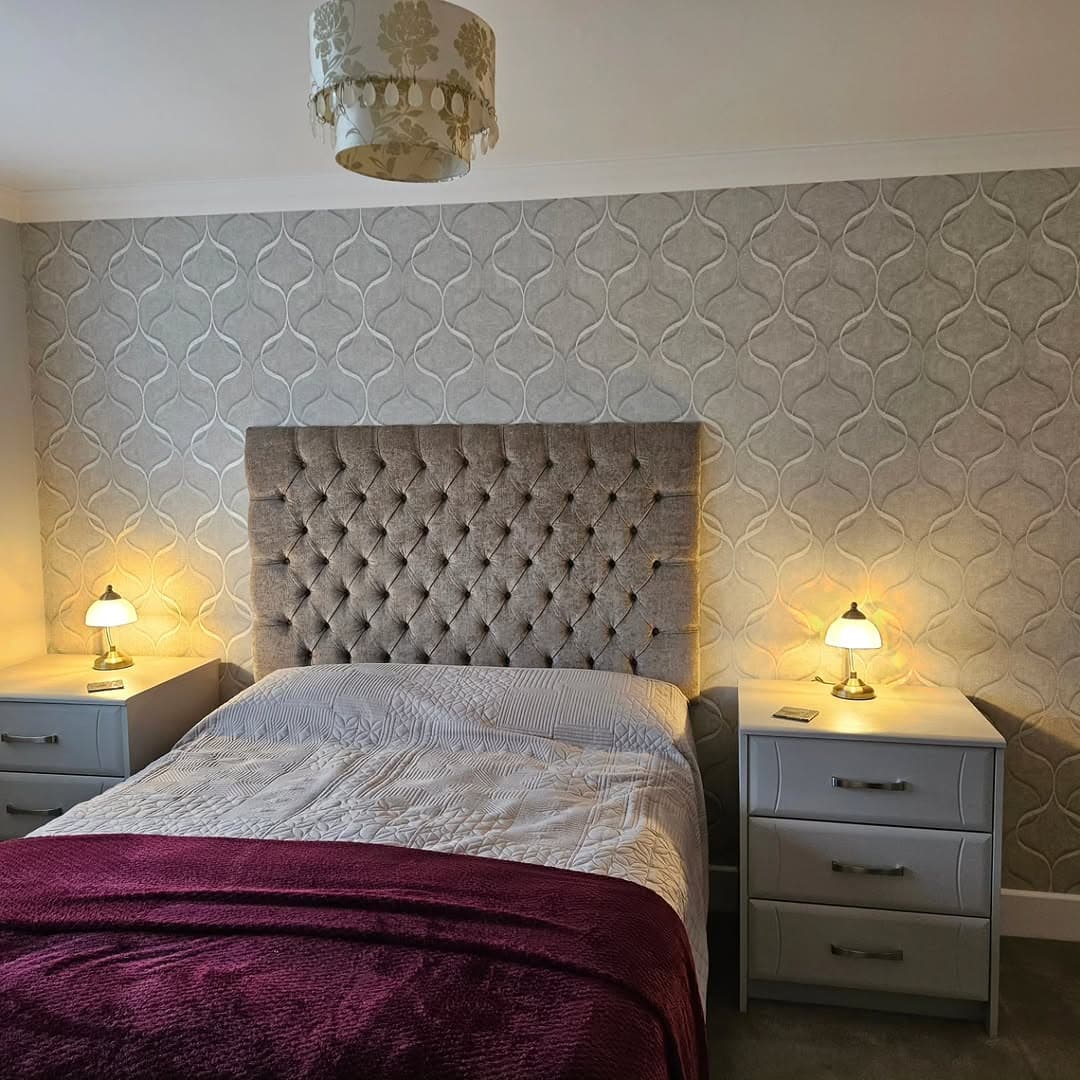
Feature wall behind the bed — geometric repeat matched across the drops.
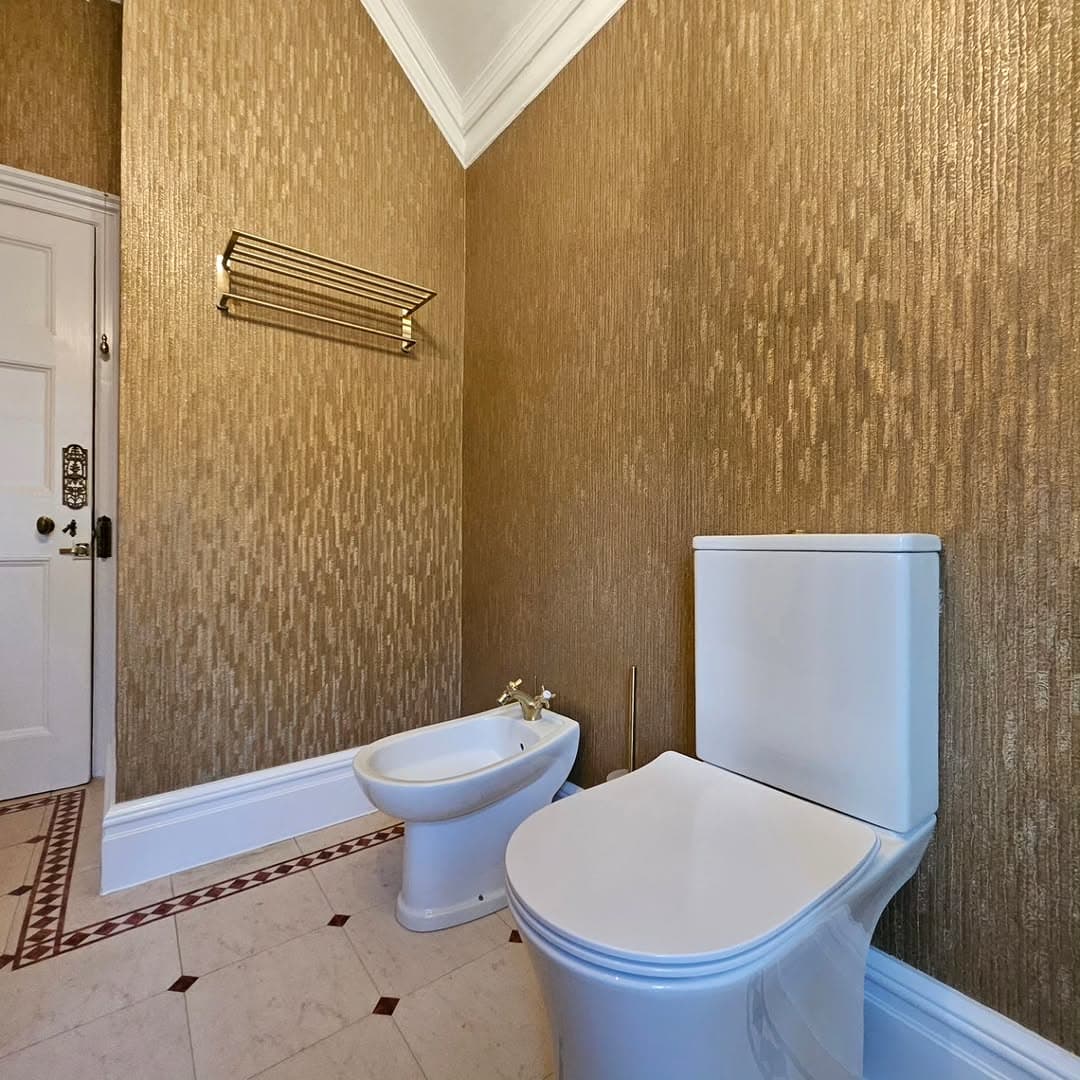
Textured gold paper in a cloakroom, cut in around period skirting.
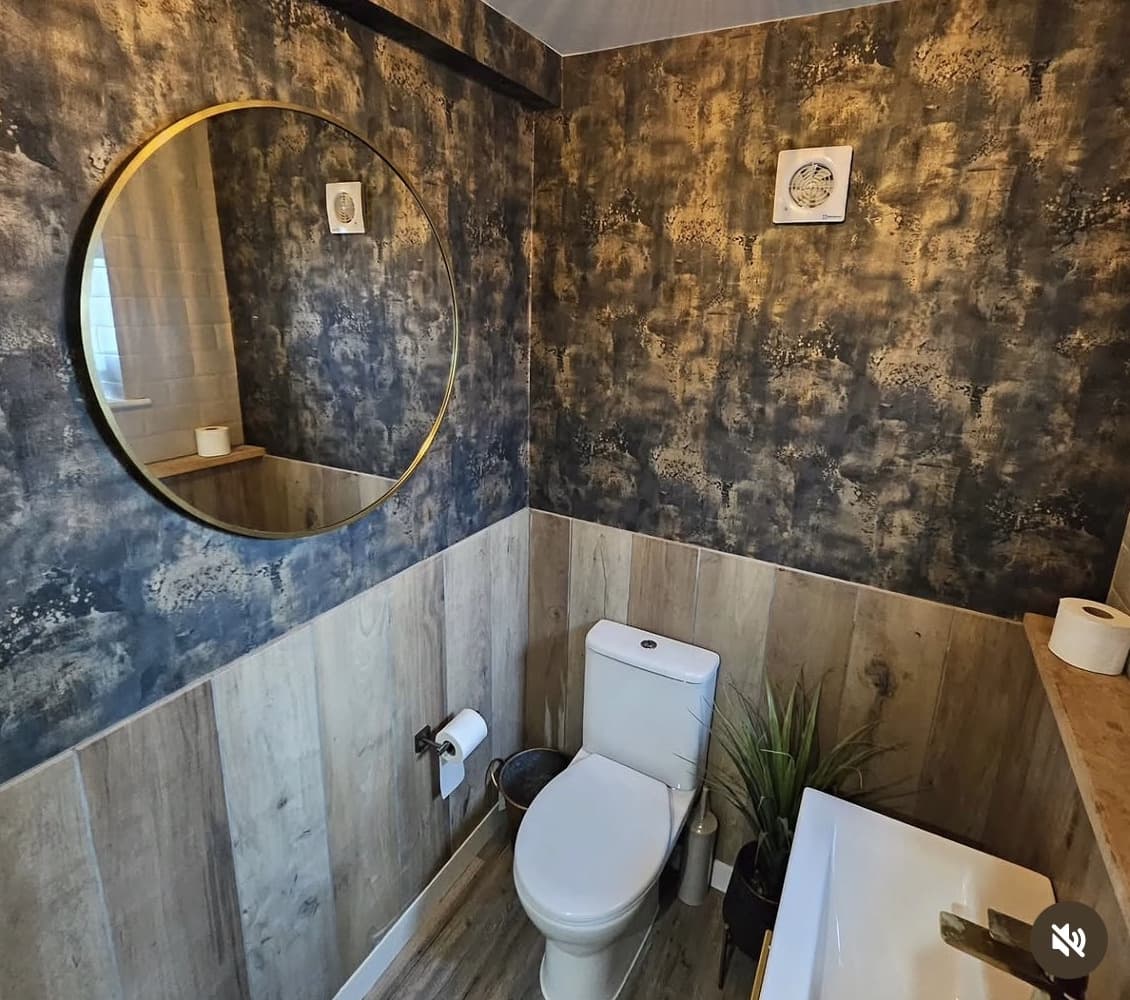
Marbled paper above panelling, taken to the panel line.
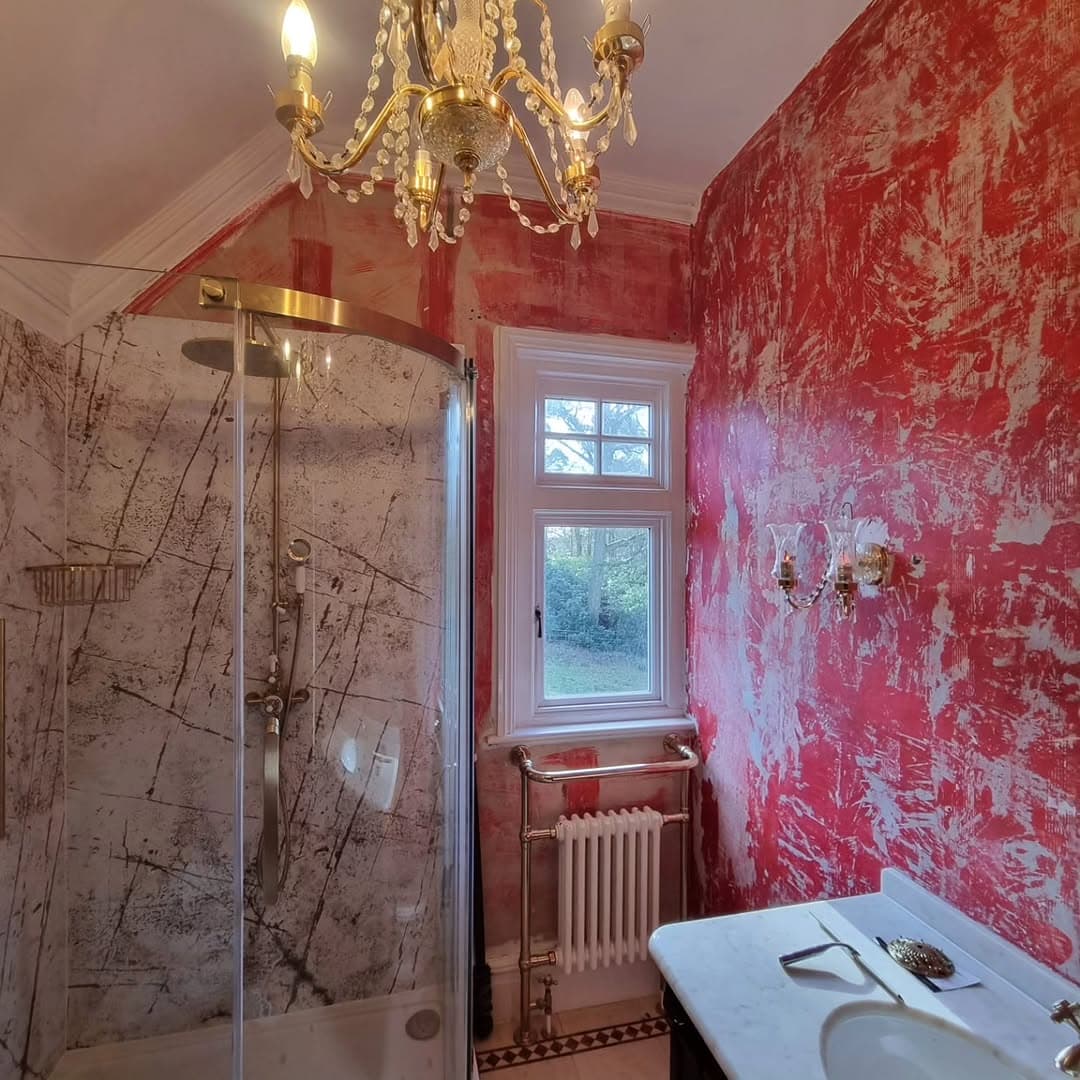
Stripped back first — this is what the price is mostly paying for.
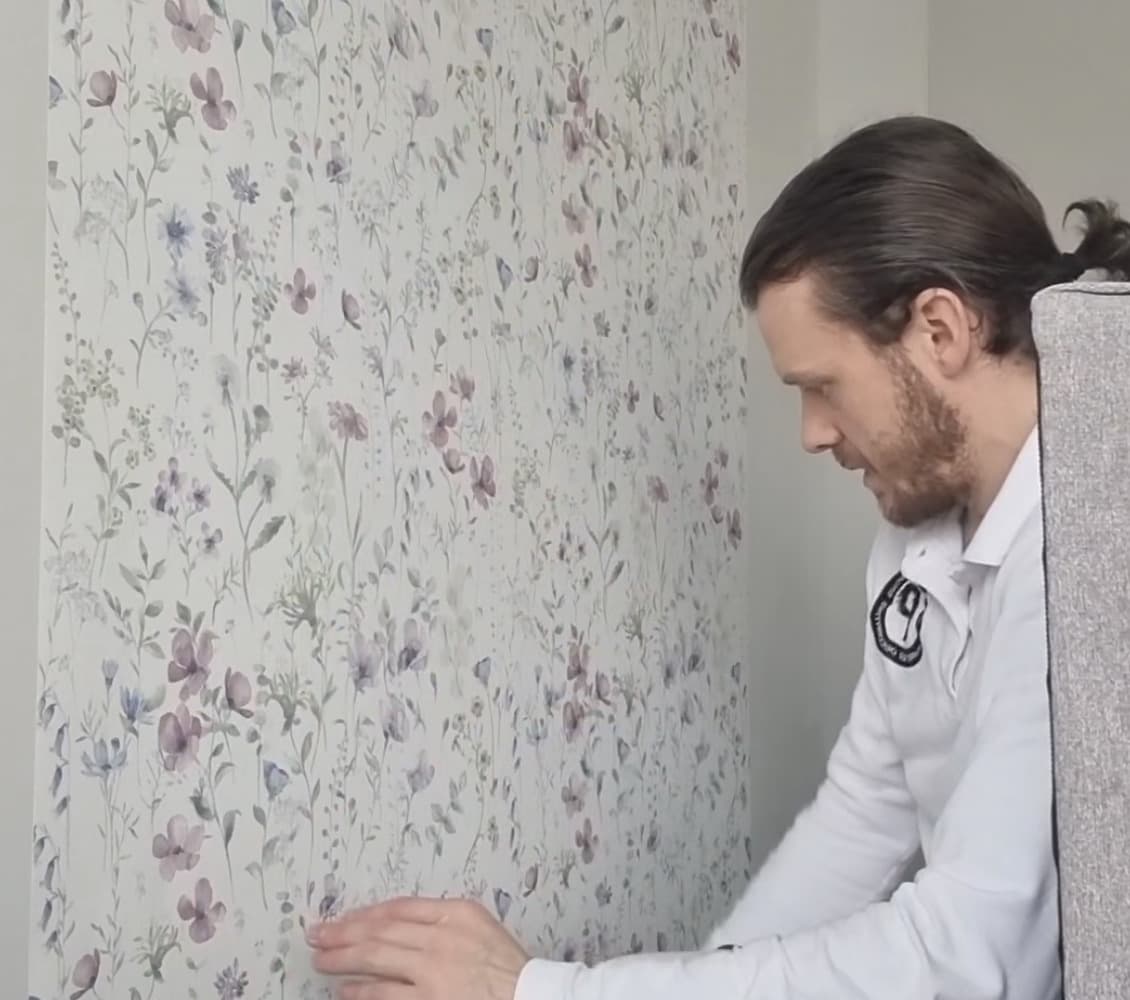
Smoothing a drop in. Plumbed off a vertical, never off the corner.
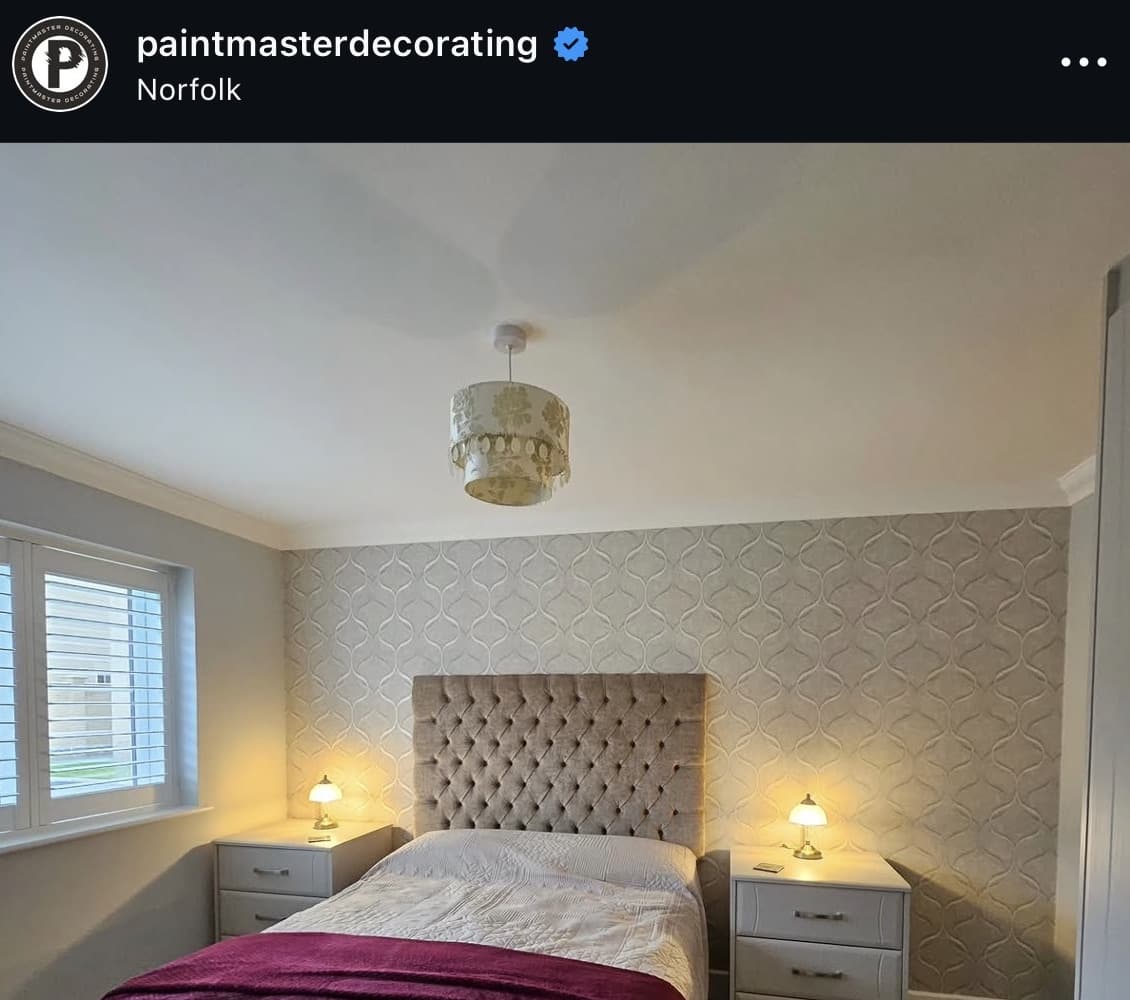
Finished feature wall, seams butted rather than overlapped.
Common Questions
First check that the paper is intended to be painted. Let both the paper and adhesive dry fully, following the paper and paste manufacturers’ instructions; the time depends on the materials and room conditions. Painting while the adhesive is still wet can disturb the finish. Tell us which lining paper or paintable wallcovering you have chosen when planning the job.
A feature wall is £80 to £200 and takes about half a day. Full rooms are priced per roll and usually take a day. What moves the price most is not the hanging — it is whether old paper has to come off first and what state the wall is in underneath.
In almost every case, yes. Hanging new paper over old means the new paste soaks through and softens the layer underneath, and the whole lot lifts at the seams. The only reasonable exception is a single sound layer of lining paper that is properly stuck down.
Yes, and it is the step most often skipped. Sizing seals a porous wall so it does not drink the paste out of the paper, and gives you the slip needed to slide a drop into position. New plaster in particular is very thirsty and will grab a drop before it is straight.
On lime plaster, older walls and anything that has been patched, yes — it is what stops every dip and repair reading through the finish paper. On flat modern plasterboard it is usually unnecessary. We will tell you which you have.
A feature wall is half a day if the wall is ready. A full room is typically a day. Stripping old paper and making the wall good is separate to that and can add anywhere from half a day upwards depending on what is underneath.
Either. Bring us what you have chosen or we will source it for you. If you are ordering yourself, tell us before you do and we will work out the roll count including the pattern repeat.
It depends on the pattern repeat as much as the wall size — a large straight-match repeat can add several rolls to the same four walls. Always order all of it in one batch, because a later batch can be a visibly different shade.
A flat, square, previously papered wall in a modern house is a genuinely doable weekend. A period chimney breast with a large repeat and no square corner to plumb from is where most first attempts go wrong — and that is usually the exact wall people want papered.
Nearly always one of three things: the wall was not sized so the paste was pulled out of the paper, lining was needed and skipped, or the room was forced dry with heating and draughts. Fix the wall, not the paper.
Planning more work in Norwich?
Explore these services if your project includes more than one part of the property.
Interior painting and decorating in Norwich
Walls, ceilings and woodwork, from a single room to a whole home.
Commercial painting and decorating in Norwich
Offices, shops and hospitality spaces, planned around trading hours.
Looking for this service elsewhere? See our wallpaper hanging across Norfolk or our wallpaper hanging in Great Yarmouth.
Explore all our painting and decorating services in Norwich.
Want a Fixed Price for Your Walls?
Send us the paper you have chosen and the room, and we will price the whole job including the stripping.